
Yes, it is legal to have CCTV on your house in the UK. You do not need permission to protect your own home with cameras. What changes the picture is what those cameras can see. As soon as a camera records anything beyond your boundary, such as a neighbour's garden, a shared drive or the pavement, data protection law applies to you, and there are a few rules you need to follow. Here is what they are, and what to do if a neighbour's camera points at your house.
When Data Protection Law Applies to Home CCTV
If your cameras only capture your own property, such as your front door, your drive and your back garden, data protection law does not apply to that footage. If they capture images of people outside your boundary, it does. GOV.UK's guidance on domestic CCTV, updated in May 2026, gives neighbours' homes and gardens, shared spaces and public areas as examples. At that point the UK GDPR and the Data Protection Act 2018 apply, and the Information Commissioner's Office (ICO) can take action if you ignore them.
In practice, plenty of homes cannot avoid catching a strip of pavement or the edge of a neighbour's drive. That is allowed. It just means the rules below apply to you.
The Rules if Your Cameras See Beyond Your Boundary
The ICO sets out what a CCTV owner must do when their cameras record beyond their property:
- Only capture what you need. Think about which areas, and whether you need images, sound or both.
- Put up a sign saying CCTV is in operation.
- Keep footage secure, and only let people who need it see it.
- Delete footage regularly, ideally automatically, unless you need a clip for an incident.
- Respond to requests. Anyone who appears in your footage can ask for a copy, and you normally have one calendar month to respond.
GOV.UK adds some sensible extras: make sure the date and time on the system are right, check you have enough recording space, and do not share recordings on social media. The ICO notes that its home CCTV guidance is under review following the Data (Use and Access) Act, so it is worth checking for updates, but the basics above are unlikely to change.
Do You Need Your Neighbours' Permission?
No. The ICO says consent will rarely be needed for home CCTV. Protecting your home and family is usually a legitimate reason to record, even if a camera catches part of the street. The catch is that your reason has to outweigh the intrusion into other people's privacy. A camera covering your front door that happens to catch passers-by is easy to justify. A camera trained on a neighbour's back garden or windows is not.
You are not legally required to tell your neighbours before installing CCTV, but GOV.UK's guidance recommends being open about it, either by telling them or with a notice. A quick word before the installer arrives saves a lot of bad feeling later.
Audio, Video Doorbells and Footage
Audio recording
Many cameras and video doorbells record sound by default. Sound picks up conversations on the street and over the fence, which is far more intrusive than a picture. GOV.UK's guidance asks whether your system needs to record audio at all. For most homes the answer is no, and switching it off is the easiest win.
Video doorbells count too
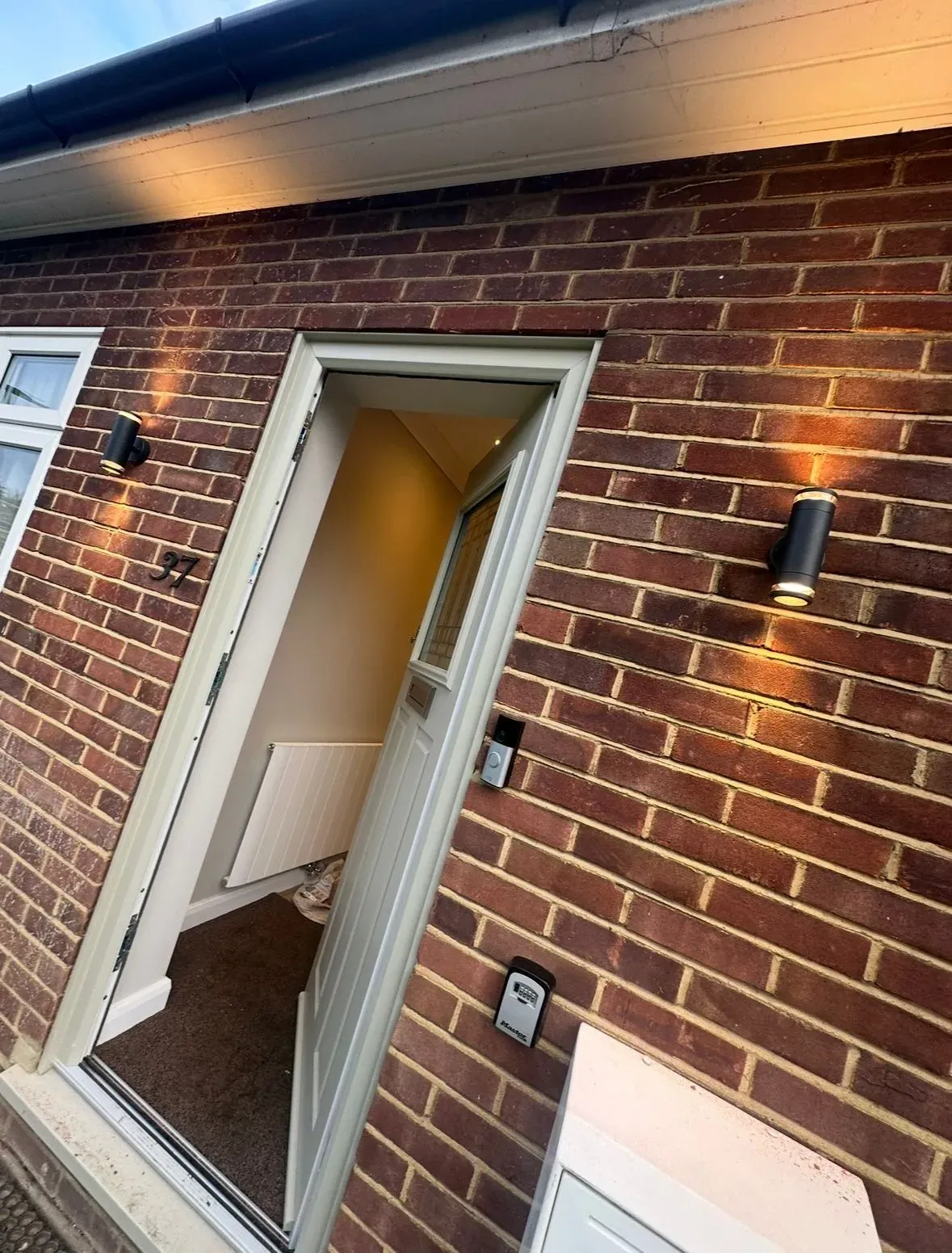
A video doorbell is CCTV as far as the rules are concerned. If yours looks straight across the road at a neighbour's front door, the same rules apply as for a fixed camera.
How long to keep footage
The guidance does not set a fixed period. It says to keep footage only as long as you need it to protect your property. In practice, most home systems are set to overwrite automatically after a set number of days, and you save a clip separately if something happens.
What to Do if a Neighbour's CCTV Points at Your House
The ICO suggests working through it in this order:
- Talk to them first. Explain your concern, ask why they have the camera, and ask to see what it actually records. It is often less intrusive than it looks.
- Ask about privacy filters. Many cameras can black out or blur part of the picture, such as your windows or garden.
- Put it in writing. The ICO publishes a template letter you can use to raise the issue and ask for a copy of any footage of you.
- Complain to the ICO if they will not engage. If your neighbour rents, you can also contact their landlord, and mediation is an option for wider disputes.
The ICO also says the police are unlikely to treat CCTV as harassment on its own, without other misconduct, so a data protection complaint is usually the more effective route.
Listed Buildings and Conservation Areas
Tunbridge Wells has a lot of listed buildings and conservation areas. If your home is listed, fixing cameras or cables to the outside may need listed building consent, and in a conservation area the council will care about how visible the equipment is. If either applies to you, check with Tunbridge Wells Borough Council before you fit anything, and choose small, discreet cameras with neatly hidden cables.
If you are deciding whether cameras are worth it, our free burglary and crime checker shows the burglaries and vehicle crime recorded near your postcode over the last year.
Getting CCTV Fitted in Tunbridge Wells and Kent
If you are planning a new system, our CCTV installation cost guide explains what to expect to pay and what a fair quote should include. We install wired and wireless CCTV, video doorbells and alarms across Tunbridge Wells, Tonbridge, Sevenoaks, Crowborough and the wider Kent and East Sussex area, and we will plan the camera positions with you at a free survey. If you are adding an alarm too, our comparison of wired vs wireless burglar alarms will help you choose. Find out more about our CCTV and alarm installation service, or get in touch for a free quote.